As winter approaches, emergency managers across Alabama work to ensure the state is ready to respond to snow, ice, freezing rain, and dangerously cold temperatures. One of the most effective ways to prepare for these hazards is through exercises that test plans, procedures, and coordination among emergency response partners.
Recently, both division-level and statewide exercises helped strengthen Alabama’s readiness for potential winter weather impacts.
At the division level, emergency management personnel and partners gathered in Hanceville to conduct a winter weather preparedness exercise focused on regional coordination and response operations. Participants worked through a simulated winter weather scenario that challenged local and regional partners to evaluate communications, resource coordination, situational awareness, and response planning.
The exercise provided an opportunity for emergency managers and other key partners to discuss how they would react to changing weather conditions and emerging impacts. By working through realistic scenarios in a controlled environment, participants were able to identify strengths, improve coordination, and refine procedures before a real-world event occurs.
Exercises like this are critical because winter weather can affect travel, utilities, public safety, and critical infrastructure with little warning, particularly in our state where significant winter storms occur infrequently.
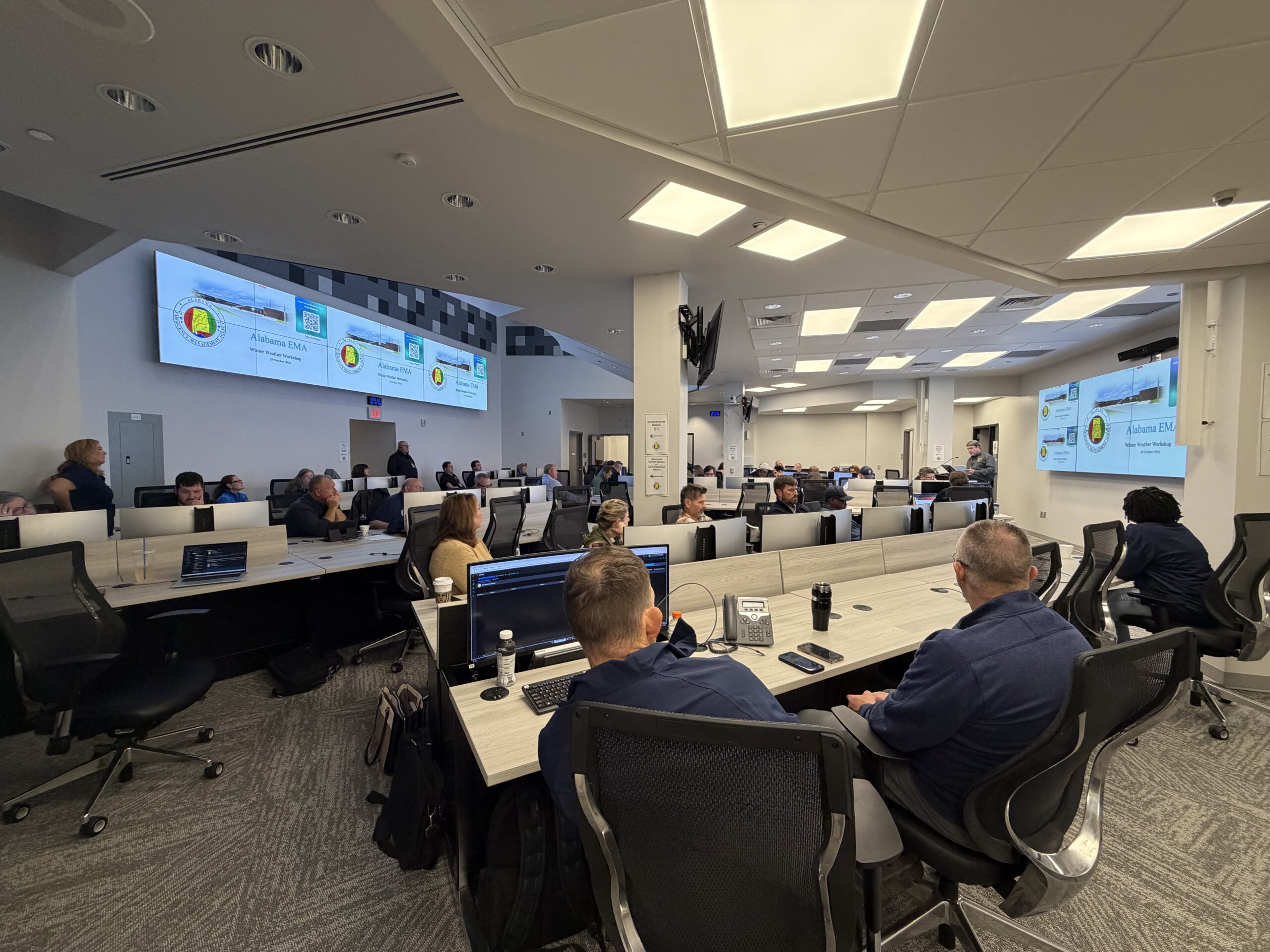
At the state level, the Alabama Emergency Management Agency brought together numerous agencies and organizations at the State Emergency Operations Center in Clanton to practice responding to a simulated winter storm. These exercises allow participants to evaluate communication, decision-making, and resource management processes in a realistic emergency environment.
State exercises help ensure agencies understand their responsibilities and can effectively coordinate their efforts during a winter weather event. Participants often include public safety agencies, transportation officials, public health partners, voluntary organizations, and other stakeholders whose support may be needed during severe weather operations. These events also help strengthen relationships among agencies, ensuring that cooperation and communication are already established before an emergency occurs.
Although winter weather is rare in Alabama, preparedness remains an important focus across Alabama. The National Weather Service and AEMA emphasize that winter hazards such as snow, sleet, freezing rain, and extreme cold can create dangerous travel conditions, power outages, and other significant impacts throughout the state.
While emergency managers and response agencies continuously train for winter weather events, preparedness begins at home.
Alabamians are encouraged to:
- Monitor local weather forecasts and trusted sources for updates.
- Have multiple ways to receive weather warnings.
- Assemble an emergency supply kit with food, water, medications, flashlights, batteries, and other essentials.
- Prepare vehicles for winter travel and avoid driving during hazardous road conditions whenever possible.
- Check on family members, neighbors, older adults, and others who may need assistance during extreme cold.
- Keep mobile devices charged and have alternate power sources available.
Winter weather may not occur every year, but when it does, preparation can make a significant difference. By exercising plans, strengthening partnerships, and encouraging personal preparedness, Alabama emergency managers continue to build a resilient Alabama that is ready for anything.