Recovery Division
The Recovery Division of the Alabama EMA is responsible for managing two of the three Stafford Act grant programs from FEMA following a federal disaster declaration by the President of the United States. The two grants are Public Assistance and Hazard Mitigation with a brief description of each listed below.
Public Assistance:
- Manage program from Project Worksheet development to applicant closure with FEMA and the State
- Gather information for FEMA requests and to complete final inspection reports
- Validate, coordinate, and process eligible disaster related funds to applicants
- Verify applicant costs in order to award grant money
- Maintain up-to-date policy information and training materials for applicants statewide
Hazard Mitigation:
- Maintain State Mitigation Plan, which is required for certain types of federal disaster assistance
- Administer the Hazard Mitigation Assistance grant programs, which provide funds to mitigate the effects of natural disasters
- Provide technical assistance for mitigation planning to local governments to ensure local mitigation plans are kept updated to ensure grant eligibility
Response Division
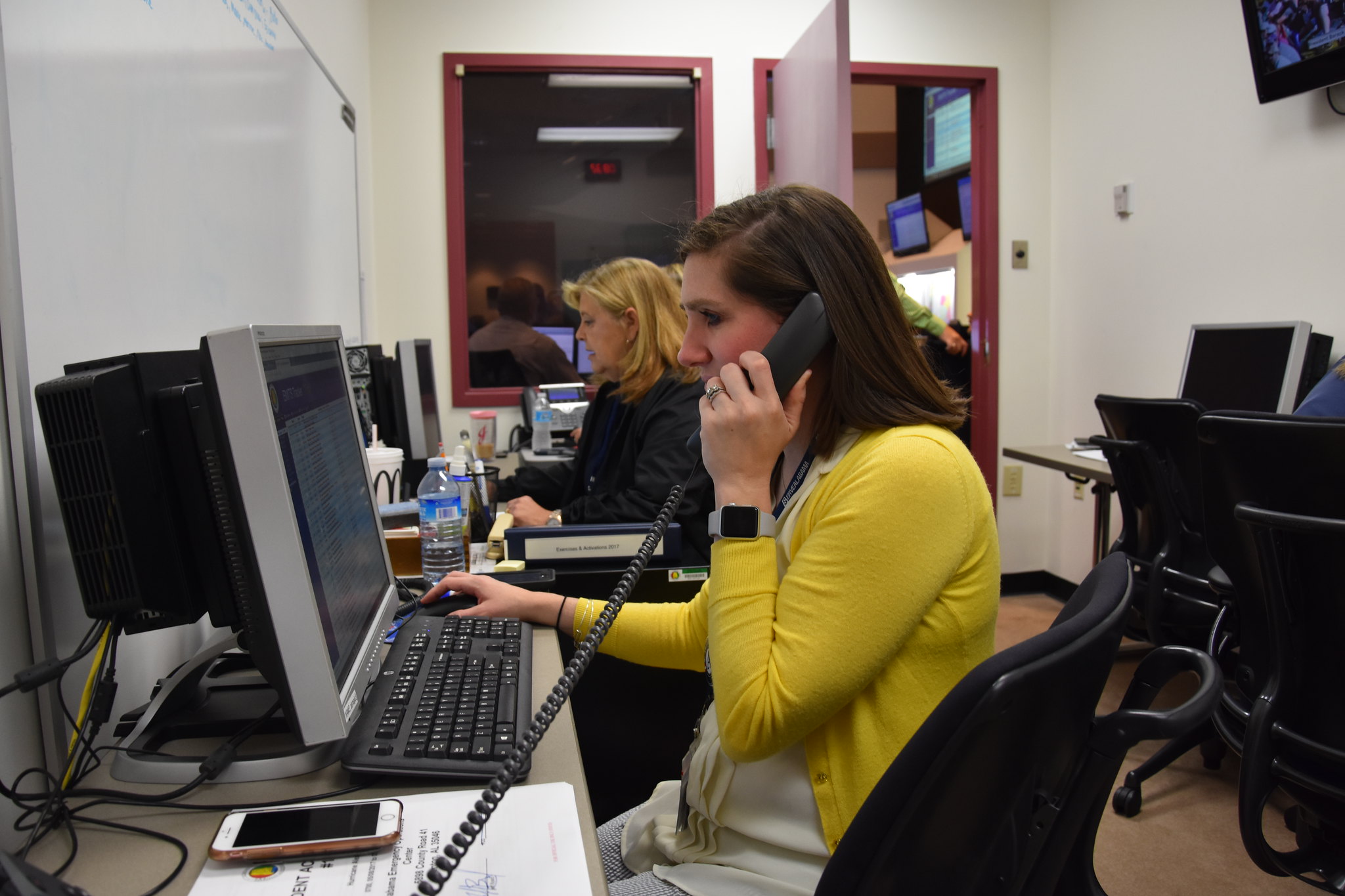
The Response Division’s responsibilities are as follows:
- Coordinate disaster response and planning capabilities through a whole community approach to natural, technological, and human caused hazards as identified in the Threat and Hazard Identification Risk Analysis.
- Develop and maintain partnerships with agencies who provide primary or secondary
Emergency Support Functions as listed in the State of Alabama Emergency Operations Plan:
- Facilitate an efficient and timely response to all hazards through the State Emergency Operations Center.
- Provide situational awareness to state leadership in order to support timely and effective emergency response decisions.
- Provide a mechanism for testing and improving capabilities of the AEMA response structure through local and statewide exercises.
- Employ intra/inter-state response forces, both private and local, to ensure unified response activities.
- Manage a comprehensive supply chain, warehouse and transportation operation to effectively and efficiently distribute supplies, equipment and services to support emergencies.
- Act as the statewide 24-hour alert and notification point to ensure timely notification of events impacting the state.
- Serve as a primary point of contact for coordinating radiological emergency preparedness planning with the impacted counties, FEMA, ADPH/Radiation Control, Southern Nuclear and the Tennessee Valley Authority, and adjacent States and Federal agencies for the two nuclear power plants in Alabama.
- Coordinate with the Southern State Energy Board as part of the Transuranic Waste (TRU) working group to outline policies and procedures necessary to safely transport shipments of TRU waste through the southern region enroute to the Waste Isolation Pilot Plant (WIPP) near Carlsbad, New Mexico.
- Coordinate with Pipeline safety departments and local EMAs in reviewing maps and proposals to evaluate hazards in the vicinity of identified pipeline sites.
- Co-chair the State Emergency Response Commission Meetings with ADEM as the designated agencies for the Emergency Planning and Right-to-Know Act (EPCRA) and coordinate training and assistance for Local Emergency Planning Committees in accordance with Executive Order No 4 (Administer the HMEP grant submittal and qualifications for eligible and ineligible activities, future requirements, and sub grant awards for the SERC).
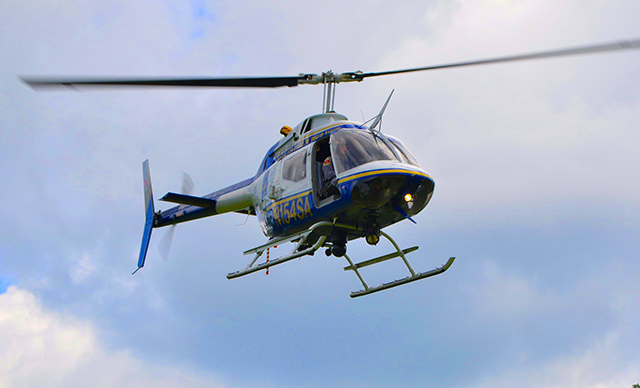
Information Technology
The Information Technology Division is responsible for planning, procurement, implementing, training, and maintaining technology systems, including software and hardware, for the Alabama Emergency Management Agency (AEMA).
Additionally, we provide support for statewide software utilized by our state and local partners within Alabama’s Emergency Management Community.
The division is structured into four specialized sections:
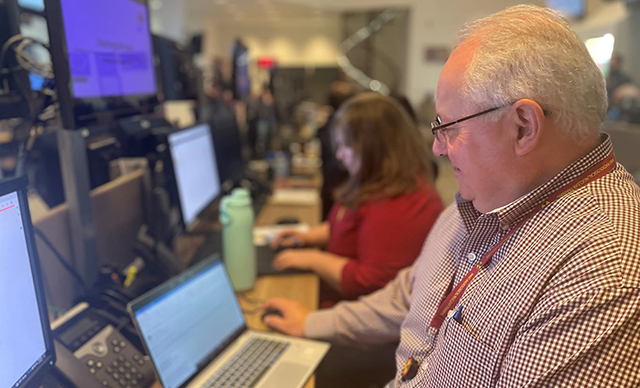
System Administration & End User Support Section:
- Provides technical support to agency personnel, ensuring efficient use of IT resources.
- Manages user accounts, access permissions, and system configurations.
- Maintains and troubleshoots agency hardware, including workstations, laptops, and peripherals.
- Ensures software updates, patches, and security configurations are applied to all systems.
Communications Section:
- Manages emergency communication systems, including radio networks and satellite communications.
- Ensures continuity of operations through redundant and resilient communication channels.
- Works with state and local partners to facilitate real-time information exchange during emergencies.
- Deploys operational communication assets supporting disasters and pre-planned events to assist state and local first responders.
Project & Asset Management Section:
- Oversees IT project planning, execution, and completion to align with AEMA’s strategic goals.
- Manages procurement and lifecycle tracking of IT assets, ensuring compliance with state regulations.
- Develops and maintains policies for IT resource management and technology adoption.
- Conducts training and awareness programs to optimize IT systems and tools.
Network & Security Section:
- Maintains the agency’s IT infrastructure, including voice services, audio/video equipment, and networking equipment.
- Implements and enforces cybersecurity policies to protect sensitive data and systems.
- Monitors network performance, security threats, and intrusion attempts.
- Coordinates with state cybersecurity teams to enhance resilience against cyber threats.
Mission Support
The Mission Support Division of the Alabama Emergency Management Agency (AEMA) is vital to the agency’s operational success, handling essential administrative and logistical tasks (property, facilities & fleet). It manages Property and Inventory, ensuring critical equipment and resources are tracked and maintained. The division oversees Grants and Contracts, securing and distributing federal and state funds, such as the Emergency Management Performance Grant (EMPG), and coordinating agreements with partners to enhance disaster preparedness and response. It maintains Facilities, including the State Emergency Operations Center (SEOC) and COOP site, to ensure they are fully operational. The division also manages the agency’s fleet, overseeing vehicle maintenance and deployment for statewide emergency operations. Additionally, its finance section ensures robust fiscal oversight, managing budgets, expenditures, and financial reporting to support AEMA’s mission.
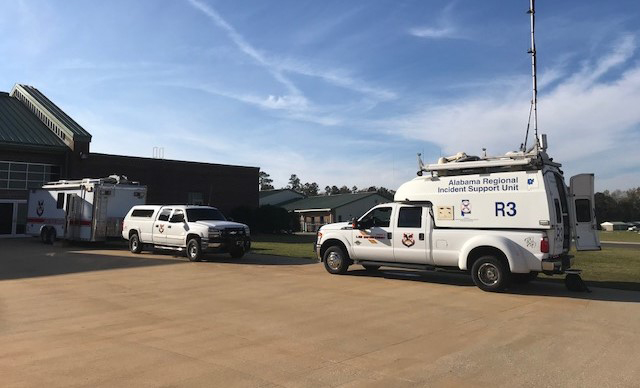
Field Operations
The Field Operations Division is in coordination with the SEOC staffs the Field Operations Branch (FOB). The FOB communicates directly with the Division Coordinators during an activation obtaining situational awareness and requests for resources and support among just a few examples. The FOB ensures that the Director of Field Operations is briefed regularly. The FOB also communicates with the Operations Chief to synchronize a coordinated response at the state or federal level. The FOB also ensures that the appropriate information is entered into WEBEOC and updated, briefs the Branches when called upon and continues to maintain two-way communications with the Division Coordinators.
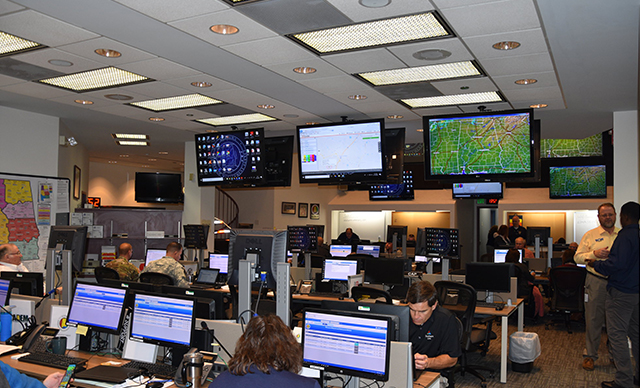
Executive Division
The Executive Division of the Alabama Emergency Management Agency works closely with the Governor’s office to ensure the governor's priorities are carried out. It also has the responsibility of offering direction and control to all other divisions in the agency, with the added duties of congressional outreach, legal counsel, public education, and preparedness.